
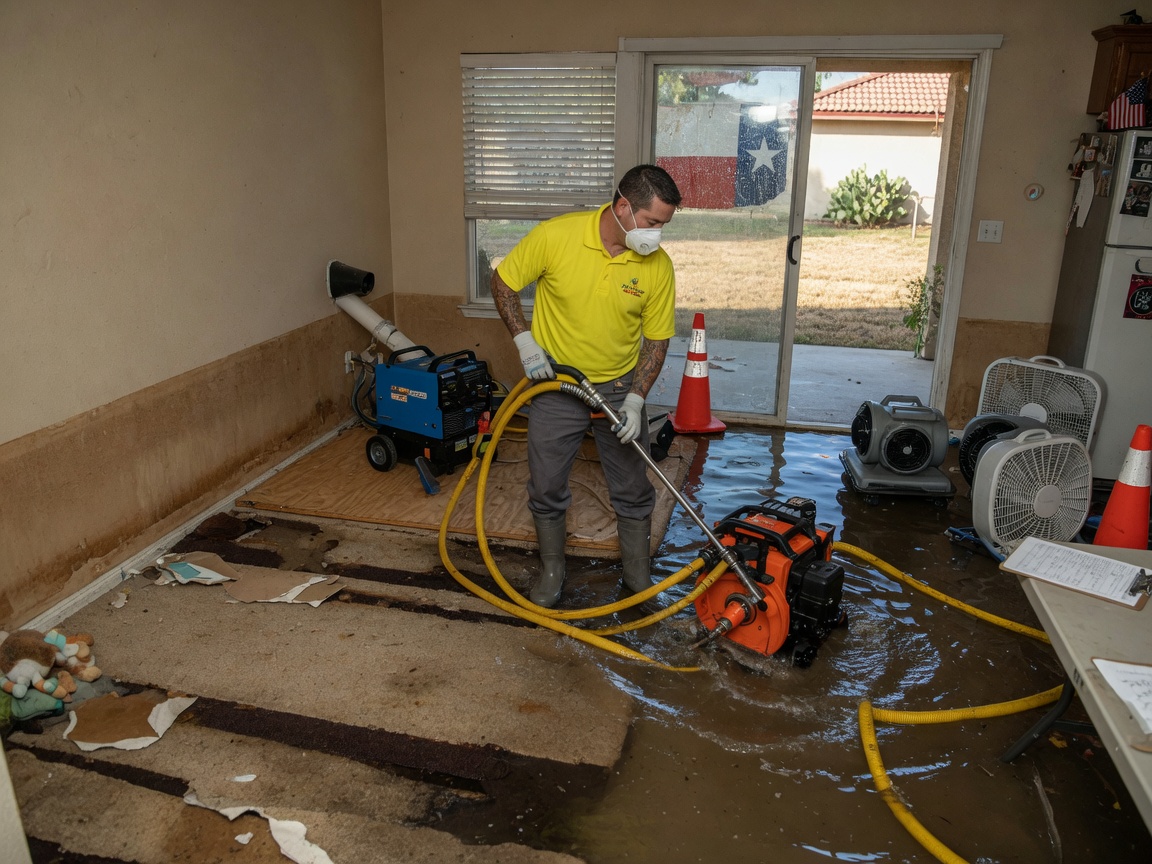
In Bexar County, water mitigation demands quick action because hot summers accelerate mold on drywall and wood framing within 24 to 48 hours. Older homes in King William and Southtown often feature plaster walls and raised foundations that trap moisture along joists, requiring moisture meters and targeted drying rather than simple fans. Properties near the River Walk face occasional backflow from aging sewer lines, so technicians must isolate affected zones and use air movers directed at subfloor cavities to avoid pushing humidity into unaffected rooms.
Downtown high-rises and Alamo Heights bungalows present different challenges, with concrete slabs hiding leaks that travel under tile or hardwood. Mild winters reduce freeze damage but allow constant humidity from the Gulf to linger in insulation, so dehumidifiers sized for local dew points are essential. Skipping thermal imaging on these jobs leaves pockets of moisture that later cause musty odors or warped flooring.
Technicians at White Water Restoration LLC map moisture levels room by room before extraction, then set up containment to protect unaffected areas. This process accounts for the clay-heavy soils around San Antonio that slow drainage and keep crawl spaces damp long after rain stops. Proper documentation of each drying zone helps homeowners understand why equipment stays in place until readings drop below 1 percent moisture content.
Technician insight
In San Antonio the thing that catches most people out with Water Mitigation is hidden moisture behind plaster in 1920s King William homes. The clay soil keeps crawl spaces damp for weeks after a leak, so skipping thermal scans leaves pockets that later cause warped floors.
Hidden Leak Under Alamo Heights Bungalow
A homeowner noticed musty air after a slow pipe leak. Inspection found water had traveled under the slab into the living room subfloor. Crew extracted water, mapped moisture, and ran drying equipment for six days until readings normalized.
Water Mitigation Services We Offer
✓Structural Drying
Removes trapped moisture from framing and subfloors in older Bexar County homes using directed air movers and dehumidifiers sized for local humidity levels.
✓Moisture Mapping
Uses thermal imaging and meters to locate hidden water in plaster walls and concrete slabs common in King William and Alamo Heights properties.
✓Content Removal and Drying
Safely extracts and dries furniture, rugs, and belongings from affected rooms near the River Walk to prevent staining and mold on porous materials.
✓Antimicrobial Application
Applies EPA-registered treatments to surfaces in Southtown homes after Category 2 water events to inhibit bacterial growth during the drying phase.
✓Crawl Space Drying
Addresses persistent dampness under raised foundations caused by Bexar County clay soils that retain water long after storms pass.
Water Mitigation Cost in San Antonio, TX
| Service | Typical Range | What Affects It |
|---|---|---|
| Emergency Water Extraction | $250–$650 | Varies by volume and access in older Southtown homes |
| Structural Drying Setup | $400–$900 | Includes equipment for typical 500–800 sq ft area |
| Daily Monitoring Visit | $75–$150 | Per visit until moisture levels stabilize |
| Moisture Mapping Report | $150–$300 | Required for insurance documentation on slab homes |
Ranges are typical for San Antonio, TX and confirmed with an exact written quote before any work starts.
How it works
- 1
Initial Assessment
Technicians arrive within hours, inspect for water source, and document moisture levels across affected zones in the home.
- 2
Water Extraction
Remove standing water with portable pumps and wands, focusing on carpets, pads, and low-lying areas first.
- 3
Drying And Monitoring
Place air movers and dehumidifiers, then return daily to check readings until moisture content stabilizes.
- 4
Final Verification
Confirm all surfaces are dry and safe before equipment removal and walkthrough with the homeowner.
Pricing
Upfront quotes after inspection; final cost depends on water category, square footage, and drying duration.