
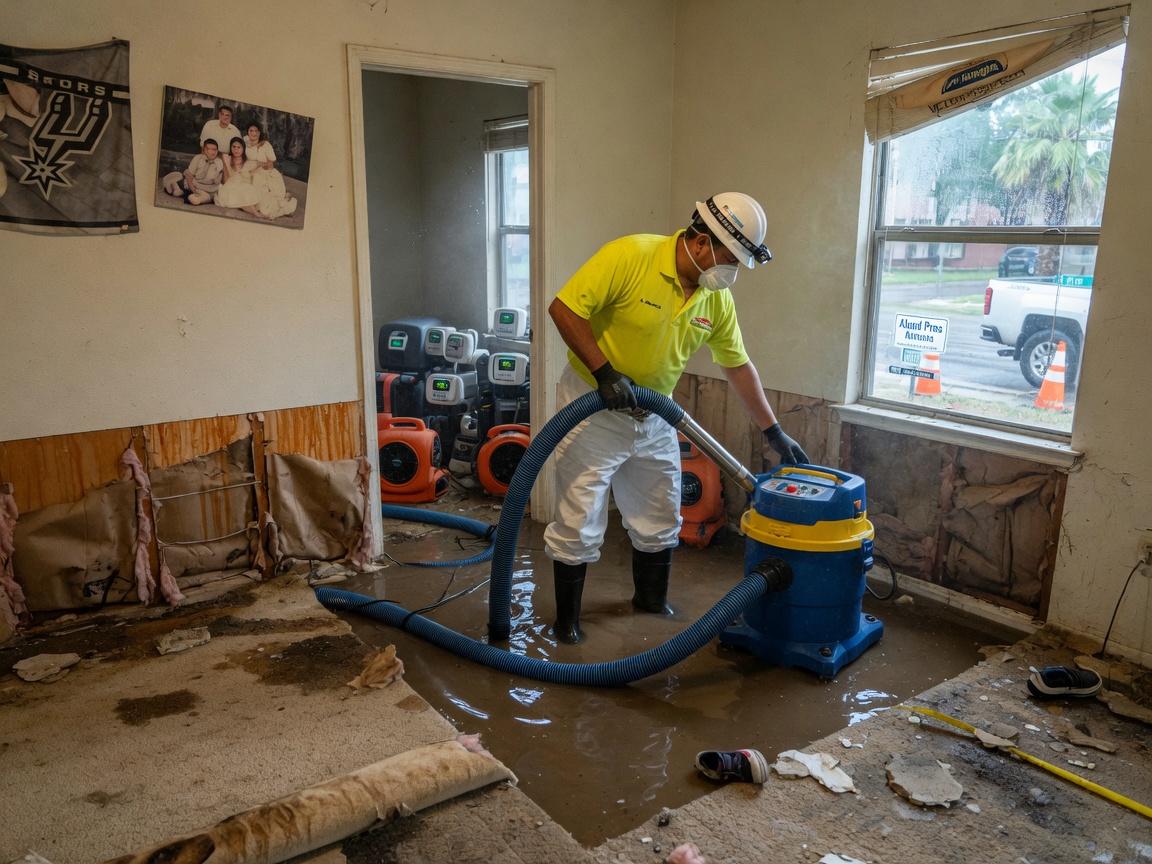
San Antonio's older housing stock in King William and Southtown often features plaster walls and pier-and-beam foundations that trap floodwater from sudden downpours common in Bexar County. Once water enters these cavities it travels along joists and can reach The Alamo-adjacent historic structures or River Walk commercial properties within hours. Technicians must pull baseboards early, use moisture meters on limestone subfloors, and run air movers at low angles to avoid pushing moisture into adjacent rooms.
Hot summers accelerate mold growth on saturated drywall and carpet padding within 48 hours, especially in Downtown high-rises or Alamo Heights ranch homes with poor drainage. Mild winters do not slow the process enough to allow waiting; instead crews focus on rapid dehumidification to keep relative humidity below 50 percent. Edge cases include sewage-tainted water from overwhelmed storm drains near the San Antonio Zoo or content loss in ground-floor Southtown retail spaces where inventory sits directly on concrete.
Flood restoration here also requires coordination with local permitting when structural repairs touch load-bearing walls in pre-1950 homes. Extraction equipment must handle the clay-heavy soils that slow natural percolation, and teams document every step for insurance adjusters familiar with repeated flash-flood claims in these neighborhoods. Skipping hidden moisture behind tile in bathrooms or under built-in cabinets leads to recurring odors months later.
Technician insight
In San Antonio the thing that catches most people out with Flood Damage Restoration is how quickly water travels under the pier-and-beam floors of 1920s King William and Southtown homes; the clay soil holds moisture against the joists long after the visible puddles are gone, so you have to pull far more flooring than homeowners expect.
Southtown Flash Flood
Heavy rain sent water through the back door of a 1930s Southtown bungalow. Extraction revealed moisture had wicked 18 inches up the plaster walls and under the oak floors. Crews removed baseboards, ran drying equipment for five days, and treated for hidden mold behind the kitchen cabinets before reinstalling new subfloor.
Flood Damage Restoration Services We Offer
✓Emergency Flood Water Extraction
High-volume pumps and truck-mounted extractors remove standing water from homes in Alamo Heights and King William before it migrates into wall cavities.
✓Structural Drying and Dehumidification
Industrial air movers and desiccant dehumidifiers dry plaster, joists, and subfloors in Southtown and Downtown properties to prevent mold after flash floods.
✓Flooded Basement Restoration
Water removal, sump pump checks, and vapor barrier replacement for pier-and-beam basements common in older Bexar County neighborhoods.
✓Contaminated Water Cleanup
Category 3 water handling from storm drains or river overflow near the River Walk, including antimicrobial treatment and disposal.
✓Flooring and Carpet Removal
Safe demolition and disposal of saturated hardwood, tile, and padding in historic Southtown and Alamo Heights residences.
Flood Damage Restoration Cost in San Antonio, TX
| Service | Typical Range | What Affects It |
|---|---|---|
| Emergency Extraction | $800–$2,200 | Depends on depth of standing water and access in older homes |
| Full Structural Drying | $1,200–$3,500 | Influenced by home age and plaster versus drywall |
| Contaminated Water Handling | $1,500–$4,000 | Higher when Category 3 water reaches living spaces |
Ranges are typical for San Antonio, TX and confirmed with an exact written quote before any work starts.
How it works
- 1
Arrival And Safety Assessment
Technicians arrive within hours, shut off utilities, and evaluate structural safety in the affected Bexar County property.
- 2
Water Extraction
Standing water is removed using pumps and wands, focusing on hidden pockets under floors in older San Antonio homes.
- 3
Drying And Monitoring
Equipment is placed and moisture readings are tracked daily until materials reach pre-loss levels.
- 4
Cleaning And Restoration
Affected surfaces are cleaned, sanitized, and prepared for repairs or replacement.
Pricing
Pricing varies by water volume, affected square footage, and whether sewage contamination is present.